Description
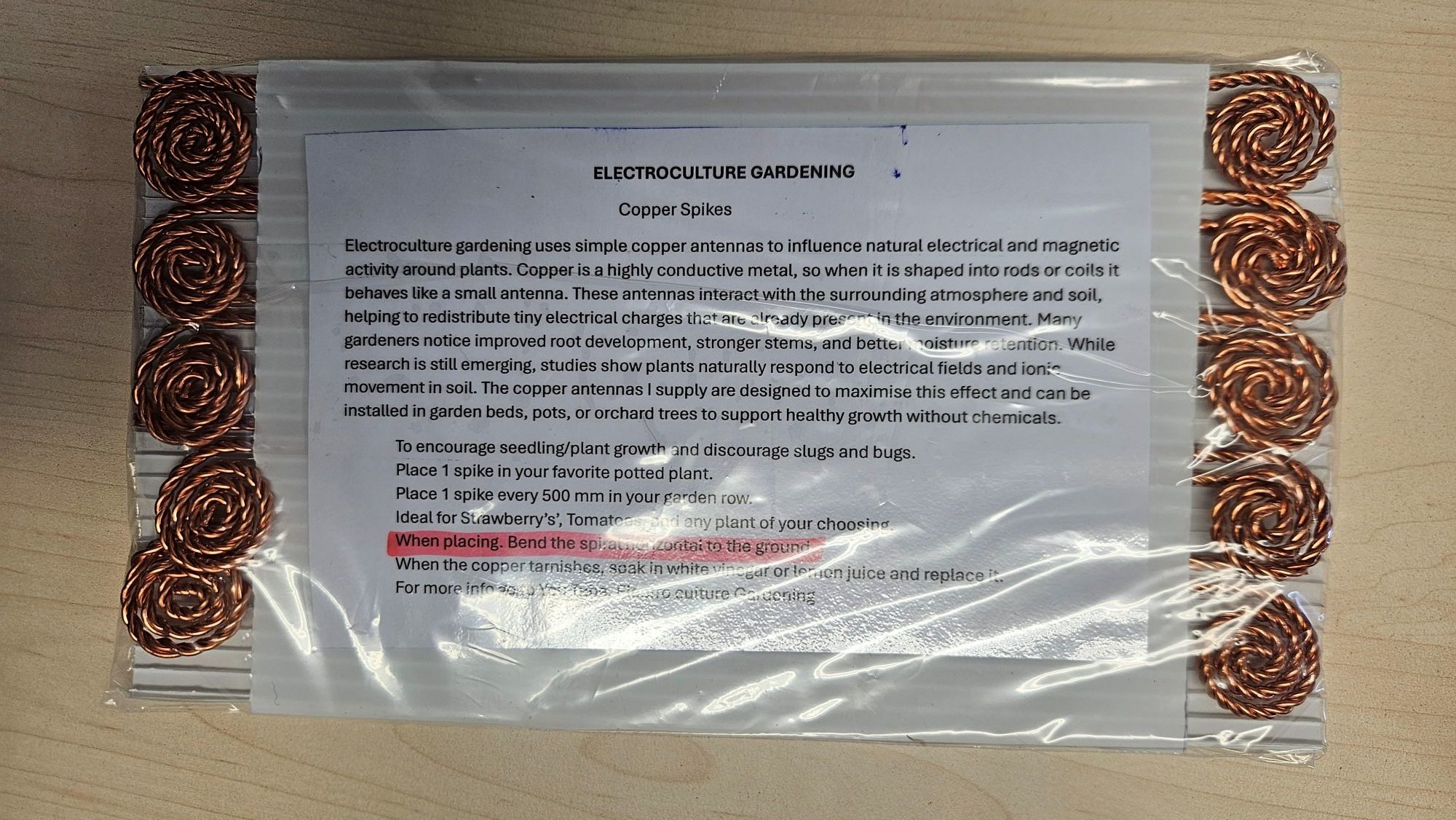
COPPER SPIKES X 10
Electroculture is a gardening method that incorporates atmospheric electricity to promote plant growth. It involves placing conductive materials, such as metal rods or wires, into the soil around plants, with the belief that they act as antennas to capture “free” energy and direct it toward the plants. The theory behind electroculture suggests that these elements can modulate subtle energy fields, influencing positive plant development. While the science has been around for a long time, it is still evolving. The concept is rooted in the understanding that plants are naturally responsive to subtle electrical signals within their environment.
History of Electroculture
The concept of using electricity to influence plant growth dates back centuries. In the 1700s, researchers began exploring the effects of electricity on plants. In the 18th century, it was noted that trees grew faster beneath the aurora borealis because of its electrical field. Throughout the 18th and 19th centuries, scientists and farmers continued exploring different electroculture techniques. World War II and the introduction of chemical fertilizers right around that same time halted most of the electroculture research. Today, popular interest in natural gardening has prompted renewed interest and studies.
How Does Electroculture Work?
The basic premise is that the cell membranes of plants can respond to and benefit from exposure to electrical currents or heightened electromagnetic fields. Common electroculture techniques include antennas, ground rods and magnetic coils. The antennas are metal wires or rods that capture energy above the plant and channel it into the soil. Ground rods are driven into the soil beside the plant to facilitate the flow of electricity. Magnetic coils are copper wire wrapped around plant stems or bases to create a concentrated electromagnetic field.
Benefits of Electroculture Gardening
Advocates of electroculture gardening claim that when an electrical current applies to a plant, it stimulates the production of plant hormones responsible for cell elongation and growth. Plants exhibit faster growth, larger yields and more abundant blooms. Additionally, electricity enhances the movement of nutrients and water within the plant, improving overall plant health. Healthier, more resilient plants are naturally better equipped to ward off pests and diseases. Proponents also suggest that electroculture may make the soil more fertile over time.
Plants That Thrive With Electroculture
While more research is needed, gardeners report success using electroculture techniques with fruit-bearing plants like tomatoes, peppers and berries. Leafy greens and root vegetables have also shown promise. Flowers that attract pollinators also fare especially well.