Description
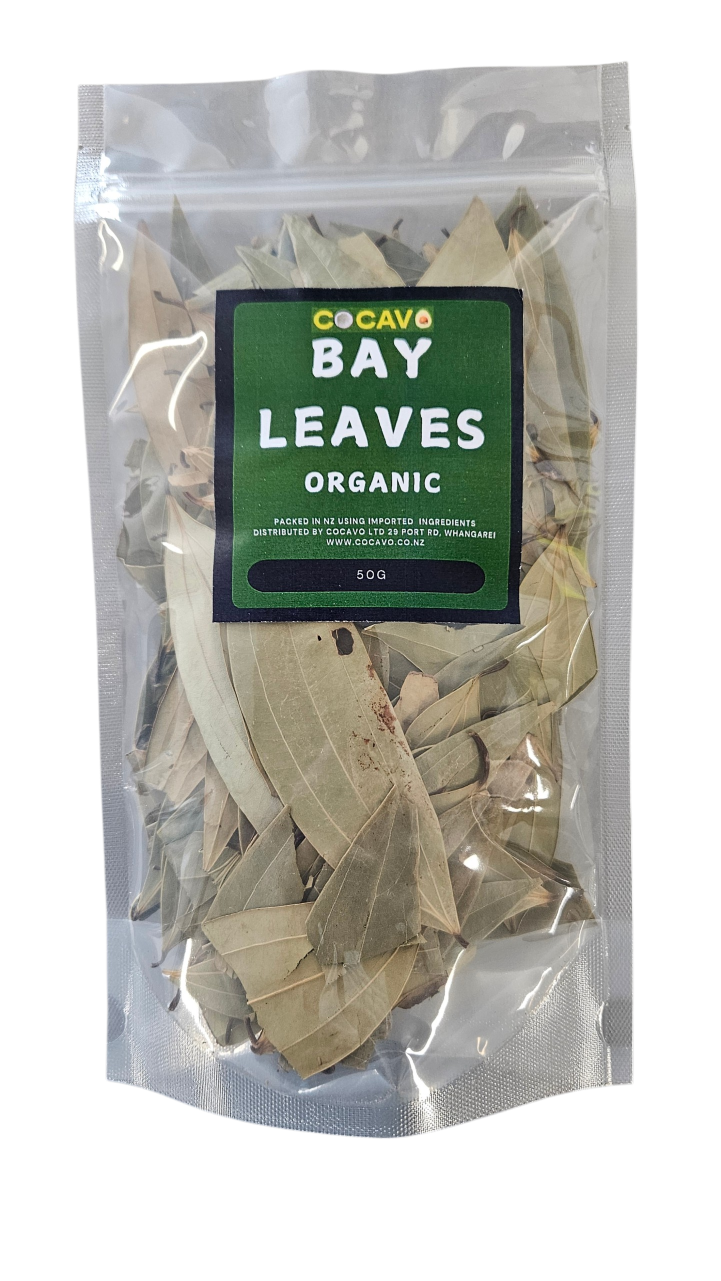
ORGANIC BAY LEAVES 50g
Bay leaves are aromatic leaves harvested from the bay laurel tree (Laurus nobilis), an ancient evergreen native to the mediterranean region. Rather than acting as a primary forward flavor, bay leaves function as a background catalyst in culinary applications. They impart a subtle, deeply complex aromatic profile featuring woodsy, herbal notes with faint hints of eucalyptus, menthol, and clove.
When simmered slowly, they release essential oils that cut through heavy starches and fats, seamlessly unifying the disparate flavors of a dish.
Fresh vs. Dried Bay Leaves
Understanding the distinct differences between fresh and dried bay leaves is essential for optimal results in the kitchen:
- Dried Bay Leaves: These are the most common commercial form. As the leaf dries, its initial harsh bitterness subsides, giving way to a more delicate, warm, and sweet herbal aroma. High-quality dried leaves should retain a pale green hue; if they have turned completely brown, they have likely lost most of their flavor potency.
- Fresh Bay Leaves: Fresh leaves possess a much more aggressive, pungent flavor with a sharp, bitter edge. If using fresh leaves, use half the amount a recipe specifies for dried leaves to avoid overpowering the dish with a medicinal, menthol-like taste.
Culinary Applications & The Whole Leaf Rule
Bay leaves are an foundational component of classic flavor bases worldwide, notably in European, American, and Indian cooking:
- Slow-Cooked Dishes: They are indispensable in long-simmering recipes like stocks, broths, stews, soups, pasta sauces, braised meats, and rice dishes like biryani.
- Classic Herb Mixes: Together with thyme and parsley, bay leaves comprise the traditional French bouquet garni.
- The Removal Rule: Always remove whole bay leaves from a dish before serving. While they are completely non-toxic, the leaves remain extremely rigid, leathery, and sharp even after hours of cooking. If swallowed, whole or large fragments can pose a serious choking hazard or cause painful scratches along the digestive tract.
Cultivation & Practical Uses
- Growing Bay Laurel: The sweet bay tree (Laurus nobilis) can be cultivated at home as a sturdy landscape shrub, an ornate container plant, or even pruned into topiary shapes. It thrives in well-draining soil and prefers full sun to partial shade.
- Pest Deterrent: Beyond the kitchen, bay leaves contain lauric acid, which functions as a natural insect repellent. Placing a few dry bay leaves directly inside pantry canisters of flour, rice, or grains is a highly effective, natural method to keep weevils, moths, and other pests away.