Is Macadamia Nut Oil Good For You?
Macadamia nut oil has become a popular choice over recent years. It is not difficult to see why; firstly, the oil tastes great, and it has a rich buttery flavor.
Additionally, there is a lot of hype about the health benefits the oil may have. In this article, we examine the full nutrition profile of macadamia nut oil.
What Is Macadamia Nut Oil?
Macadamia nuts are delicious little bundles of fat, vitamins, and minerals.
According to many people, they are the world’s most delicious nut.
The situation is similar with macadamia nut oil; not many cooking oils taste good, but this one does.
With a creamy, buttery and slightly nutty flavor, macadamia nut oil is hard to beat in the taste department.
The oil comes from the nut “meat,” and it is predominantly a source of monounsaturated fatty acids (MUFA), which are the type of “heart healthy” fats olive oil is known for.
Macadamia nut oil offers even more MUFA than olive oil does.
Types of Macadamia Nut Oil
There are two main types of macadamia nut oil, which you can identify based on their appearance;
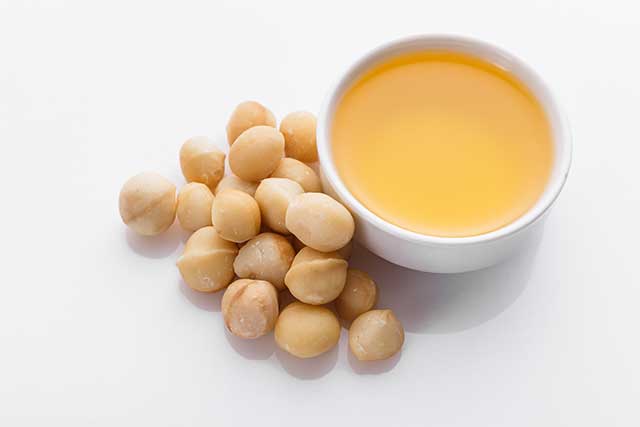
- Cold pressed macadamia oil: an unrefined oil made by cold-pressing macadamia nuts. Cold-pressed oil has a goldish yellow color and a slightly nutty smell.
- Refined macadamia oil: producers use solvents to extract the oil from the nuts after the first press. This oil has a very light color and no strong scent.
As with all cooking oils, cold-pressed macadamia oil is a healthier (but more expensive) choice.
The reason for this is because unrefined, cold-pressed oils contain more natural antioxidants that protect against heat-induced oxidation and improve shelf life (1).
Nutrition Facts and Fatty Acid Profile
Macadamia nut oil is an isolated source of fat, so it has no carbohydrate or protein.
Here is the fatty acid profile of macadamia nut oil;
| Type of Fat | % Ratio |
|---|---|
| Saturated Fat | 16.1 % |
| Monounsaturated Fat | 80 % |
| Polyunsaturated Fat | 1.8 % |
| – Omega-3 | 0.42 % |
| – Omega-6 | 1.35 % |
As the table shows, most of the fat content is monounsaturated, followed by a moderate amount of saturated fat.
There are also small amounts of polyunsaturated fatty acids, and the oil has an omega-6 to omega-3 ratio of slightly over 3.21:1.
Smoke Point
Macadamia nut oil is thought to have a relatively high smoke point of 199°C (390°F) (3).
Fatty Acid Breakdown
For anyone wishing to know more about the specific fatty acids in macadamia oil, you can see them below;
| Saturated Fatty Acids | % Ratio |
|---|---|
| Lauric acid | 0.09 % |
| Myristic acid | 0.82 % |
| Palmitic acid | 8.45 % |
| Heptadecanoic acid | 0.28 % |
| Stearic acid | 3.9 % |
| Arachidic acid | 2.79 % |
| Behenic acid | 0.75 % |
| Monounsaturated Fatty Acids | % Ratio |
| Palmitoleic acid | 19.11 % |
| Oleic acid | 56.35 % |
| Vaccenic acid | 3.09 % |
| Gondoic acid | 2.18 % |
| Gadoleic acid | 0.12 % |
| Erucic acid | 0.22 % |
| Polyunsaturated Fatty Acids | % Ratio |
| Hexadecadienoic acid | 0.02 % |
| Hexadecatrienoic acid | 0.06 % |
| Linoleic acid | 1.35 % |
| Linolenic acid | 0.12 % |
| Eicosapentaenoic acid | 0.30 % |
The main fatty acids in macadamia nut oil are oleic acid, palmitoleic acid, and palmitic acid.
Health Benefits
Now that we’ve looked at the nutritional properties of macadamia oil, it is time to take a look at the potential health benefits.
Here is an overview.
1) Macadamia Nut Oil Has a High Resistance To Oxidation (It’s Good For Cooking)
When we cook with oil, we want to use a heat-stable oil.
In other words, we don’t want the oil to break down and generate large numbers of oxidation products when exposed to heat.
Oxidation products, such as oxygenated aldehydes, can cause oxidative stress and, over the long-term, likely contribute to chronic illnesses (4, 5).
On the positive side, macadamia nut oil displays excellent oxidative stability.
In a study that compared the oxidative stability of eight different oils—including avocado oil and grapeseed oil—macadamia was the most resistant to oxidation, and it also had the best shelf-life (6).
Additionally, macadamia nut oil contains extremely low amounts of polyunsaturated fat, which is the type of fat most susceptible to oxidation (7).
Macadamia oil contains a similar amount of polyunsaturated fat as coconut oil. It has a smaller concentration (1.8%) of polyunsaturated fatty acids than olive oil (10.5%) and avocado oil (13.5%) (2, 8, 9, 10).
2) A Balanced Omega-6 to Omega-3 Ratio
Throughout evolution, the standard human diet is thought to have contained omega-6 and omega-3 in a relatively balanced ratio of 1:1 (11).
Surprisingly, these days the average diet can contain ratios up to 20:1 in favor of omega-6. Some researchers believe the present situation of too much omega-6 and not enough omega-3 contributes to inflammation and related problems (12).
However, others believe that it is outright omega-3 deficiency rather than the omega-6 to 3 ratio that causes problems (13).
There will be definite answers in time, but for now, it seems prudent to at least be aware of the potential harms of an excessive omega-6 imbalance.
However, macadamia oil offers a relatively balanced ratio of approximately 3:1 (2).
3) The Oil Is Shelf-Stable
As previously mentioned, research has shown that macadamia nut oil is fairly shelf-stable.
This stability is important because tests show that some vegetable oils are slightly oxidized even before the point of sale (16).
The tests on macadamia nut oil found that it displayed good shelf-stability and didn’t oxidize before its “best-before” date.
On the other hand, the other seven oils in the test (rice bran oil, sesame oil, avocado oil, almond oil, hazelnut oil, grapeseed oil, and walnut oil) all had “significantly lower” shelf lives than their “best-before” date (6).
4) May Lower Markers of Inflammation
Some animal studies suggest that macadamia nut oil may have a beneficial impact on markers of inflammation.
In one study, mice were assigned either a processed high-fat diet or a processed high-fat diet supplemented with macadamia oil.
Interestingly, the mice supplemented with macadamia oil displayed reduced levels of inflammation and better insulin sensitivity (17).
However, we should remember that this was a mouse study using heavily processed diets.
In other words; we can’t assume that adding macadamia oil to a healthy human diet would have the same effect, and research in humans is necessary to confirm this.
5) May Improve the Cholesterol Profile
Based on research, it appears that including macadamia nuts in the diet may improve the cholesterol profile.
A randomized and controlled 5-week feeding study fed twenty-five hypercholesterolemic participants one of two experimental diets.
Both diets were carefully matched for calories and nutrients and contained very similar foods. However, one diet included 1.5 oz (42 grams) of macadamia nuts per day while the other did not.
Interestingly, the macadamia diet lowered levels of non-HDL cholesterol and improved the ratios of total cholesterol to HDL and LDL to HDL. These positive changes are associated with lower cardiovascular risk (18, 19).
While we are talking about macadamia nuts here rather than macadamia oil, the nuts have a fat content of 76%, and it is possible that the oil would have the same effect.
However, research needs to confirm this.
6) Macadamia Nut Oil Contains Several Antioxidants
Macadamia oil provides tocopherols (vitamin E) and squalene, both of which are antioxidant compounds (20, 21);
Tocopherols are notable for their effectiveness in protecting lipids (fats) against oxidation, and they help to enhance the oxidative stability of an oil (22).
Additionally, research demonstrates that vitamin E may protect LDL from oxidizing inside the body (23).
Less is known about squalene, but this compound appears to boost the antioxidant effects of astaxanthin (found in foods like salmon and shrimp) and to have beneficial properties for skin health (24).
7) Benefits For Skin Health
Although we are focusing on the nutritional benefits of macadamia oil, it can also be beneficial for skin health.
For instance, the antioxidant squalene we just discussed has research-proven skin hydrating and moisturizing benefits (25, 26).
Furthermore, high-dose ingestion of squalene has been shown to reduce DNA damage from UV exposure (27).
8) Oleic Acid
Oleic acid is the main fatty acid in macadamia nut oil, and it is also the most prevalent fat in extra virgin olive oil.
Overall, the majority of studies on oleic acid suggest that it may have positive impacts on human health.
For instance, several studies show that oleic acid may have a beneficial effect on (28, 29, 30);
- Enhancing immune health
- Inflammatory diseases
- Lowering inflammatory markers
How To Use Macadamia Nut Oil

Since macadamia oil appears to be highly resistant to oxidation, we can use it for many different things in the kitchen.
Here are a few ways to use it.
1) Stir-Frying
Thanks to its heat stability, macadamia oil is an excellent choice for stir-frying.
The cold-pressed version of the oil works best here because it gives the food a slightly nutty taste. These small hints of flavor work well in dishes, as anyone who has used sesame oil may realize.
Combining your favorite meat and veggies with some soy sauce, garlic and ginger and stir-frying them in macadamia oil tastes great.
2) Making Healthier Mayonnaise
Instead of buying store mayonnaise, most of which is full of soybean oil, you can use macadamia oil to make your own.
It works well, it tastes great, and it only takes about 5 minutes to make.