COOKING WITH DUCK FAT
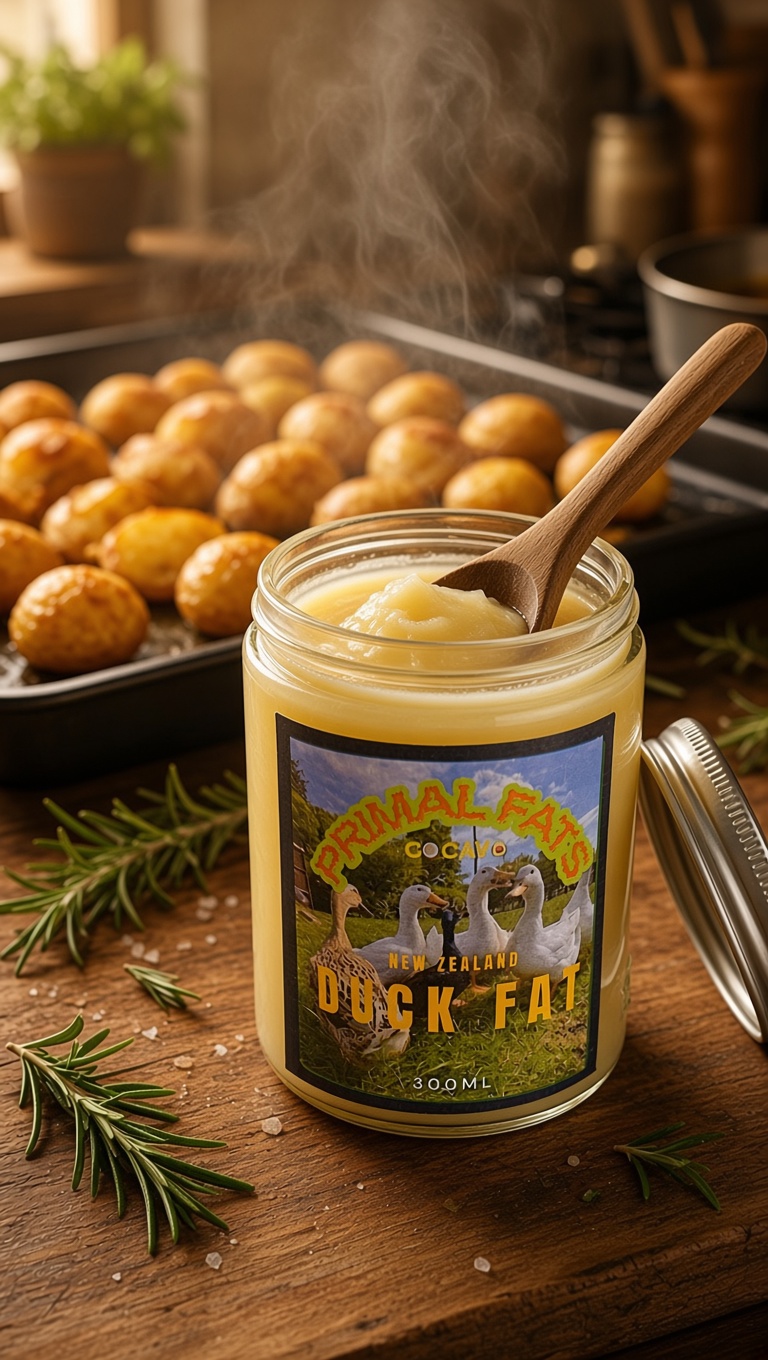
Benefits of Cooking with Duck Fat
Duck fat is a traditional cooking fat prized in French and European kitchens for both its performance and flavour. Here are the main practical and nutritional points:
1. Excellent Heat Stability
- Smoke point is typically around 190–200°C (375–390°F), higher than butter and many vegetable oils.
- This makes it suitable for roasting, pan-frying, searing, and confit without breaking down or producing excessive off-flavours.
2. Outstanding Flavour
- It has a rich, savoury, slightly meaty taste that enhances potatoes, vegetables, poultry, and red meat.
- Roast potatoes cooked in duck fat are famously crisp on the outside and fluffy inside — one of the classic uses.
- It adds depth without overpowering the main ingredients.
3. Favourable Fat Profile
- Duck fat is roughly:
- 50–65% monounsaturated fat (mostly oleic acid, the same healthy fat found in olive oil and avocados)
- 30–35% saturated fat
- Relatively low in polyunsaturated fats
- The high monounsaturated content and low polyunsaturated content make it more stable under heat than many seed oils, which can oxidise more readily when heated.
4. Texture and Crisping Ability
- It produces exceptionally crisp textures, especially on potatoes, chicken skin, and roasted vegetables.
- In confit, it gently cooks and preserves meat while keeping it moist and tender.
5. Versatility
- Works well for:
- Roasting potatoes and root vegetables
- Confit (duck legs, garlic, tomatoes)
- Frying eggs or searing steaks
- Making pastry or enriching sauces
- It solidifies when refrigerated, so it’s easy to store and scoop.
Practical Notes
- A little goes a long way because of its rich flavour.
- Like all pure fats, it is calorie-dense, so it’s best used as a flavourful cooking medium rather than in large quantities.
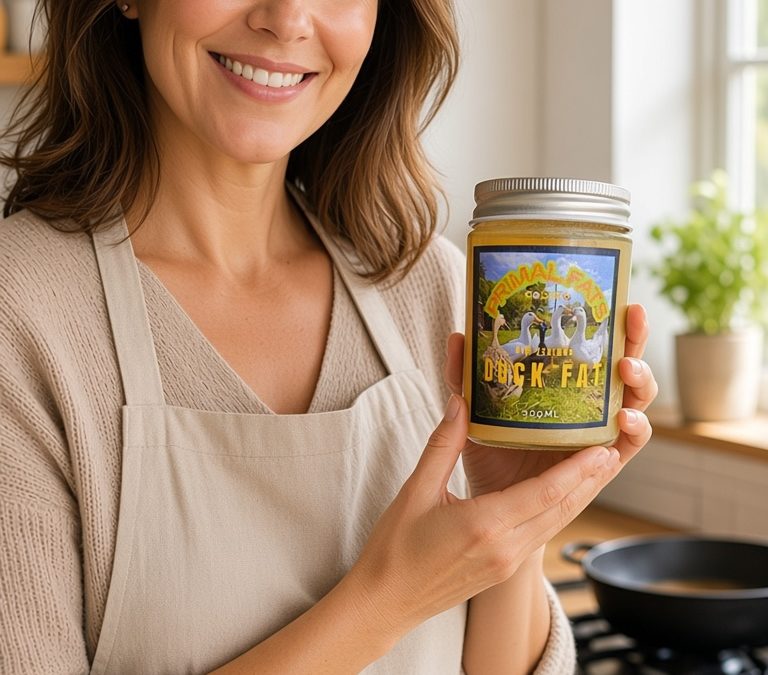
- High-quality rendered duck fat (such as the New Zealand product in your images) is typically pure and free from additives.
In short, duck fat combines good heat performance, a desirable fat composition, and excellent flavour — which is why chefs and home cooks have valued it for centuries, especially for dishes where texture and taste matter most.
Here are some excellent, practical recipe ideas that really show off duck fat:
1. Classic Duck Fat Roast Potatoes (the ultimate)
- Parboil floury potatoes, rough them up, toss generously in melted duck fat with salt, garlic, and rosemary.
- Roast at high heat (220°C / 425°F) until deeply golden and ultra-crispy.
- The gold standard use for duck fat.
2. Duck Confit
- Salt duck legs overnight with garlic, thyme, and pepper.
- Submerge in duck fat and cook very slowly (around 120–140°C / 250–285°F) for several hours until the meat is falling-off-the-bone tender.
- Crisp the skin under the grill or in a hot pan before serving. Perfect with the roast potatoes above.
3. Duck Fat Fried Eggs
- Heat a spoonful of duck fat in a pan and fry eggs slowly.
- The rich flavour and high smoke point give beautifully crisp edges and a luxurious taste — far better than ordinary oil or butter.
4. Roasted Root Vegetables
- Toss carrots, parsnips, beetroot, or Brussels sprouts in duck fat with salt, pepper, and herbs.
- Roast until caramelised and crispy. The fat brings out natural sweetness and gives great colour.
5. Duck Fat Roast Chicken
- Rub a whole chicken inside and out with duck fat, salt, and herbs.
- Roast as normal — the skin becomes exceptionally crispy and the meat stays moist.
6. Sautéed Greens or Cabbage
- Wilt kale, cavolo nero, or shredded cabbage in a little duck fat with garlic.
- Simple but deeply flavourful side dish.
7. Duck Fat Pastry or Savoury Pie Crust
- Replace some or all of the butter/lard in shortcrust pastry with duck fat for a rich, flaky result — excellent for meat pies or quiches.
8. Crispy Duck Fat Hash
- Fry leftover roast potatoes or boiled potatoes in duck fat until deeply golden, then add onions, herbs, and top with a fried egg.
Quick tips:
- Start with 1–2 tablespoons per tray of vegetables or potatoes — a little goes a long way.
- Keep a jar in the fridge; it solidifies and scoops easily.
- Once you’ve cooked with it, you can strain and reuse the fat a few times.