Description
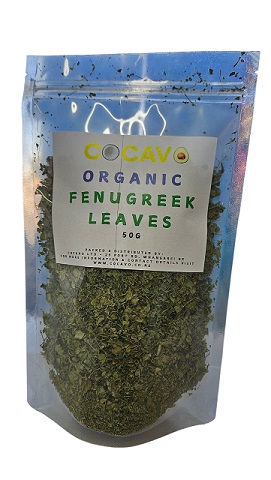
Organic Fenugreek Leaves (Methi)
What are Dried Fenugreek Leaves?
Fenugreek is a small green leafy plant believed to have its earliest origins in the Middle East, Europe and West Asia. The leaves are harvested and dried to produce dried fenugreek leaves. Nowadays, fenugreek (also known by the name Kasuri Methi leaves) is widely cultivated in India and is most commonly linked with Indian cuisine.
What Are Dried Fenugreek Leaves Used For?
Dried Fenugreek Leaves are used on their own or as part of a spice blend to flavour soups, sauces, curries, vegetables, bread, eggs and many other dishes. Apart from being used as a cooking ingredient, Fenugreek also has many historical health benefits (keep reading further down to learn more).
What Do Dried Fenugreek Leaves Taste Like?
Dried Fenugreek Leaves have a slightly bitter and earthy taste compared with celery, and a sweet finishing kick similar to the taste of maple syrup. (Surprisingly, fenugreek extract is often used to flavour artificial maple syrup).
How Do I Use Dried Fenugreek Leaves in Cooking?
Dried Fenugreek leaves are essentially a herb, so treat them in that way. Combine with spices when building stocks, soups and curries (try this delicious Smokey Chicken Curry recipe), dahl (Spinach Roasted Tomato Dahl recipe) and stews. Another popular use is in the very popular Indian potato dish, Aloo Methi
- Aids digestion: The high fiber content promotes healthy gut function, prevents constipation, and can reduce bloating and gas.
- Supports weight management: The fiber can increase satiety, helping to control appetite and reduce overall calorie intake.
- Promotes heart health: Fenugreek leaves can help lower LDL (bad) cholesterol and triglycerides, which may decrease the risk of heart disease.
- Packed with vitamins and minerals: They are a good source of vitamins A and C, iron, calcium, and potassium.
- Boosts immunity: Vitamins A and C support immune function.
- Supports bone health: They contain vitamin K, which is essential for bone health.
- Supports breastfeeding: Fenugreek has been shown to help increase milk production in lactating women.
- Improves hair and skin: The leaves can nourish hair follicles, help with dandruff, and are used in traditional remedies for skin inflammation and wounds.
- Contains antioxidants: Fenugreek leaves have antioxidant properties that help protect the body from free radicals.
- Incorporate fresh leaves into dishes like curries, soups, and salads.
- Use dried leaves (kasuri methi) as a seasoning for various recipes.